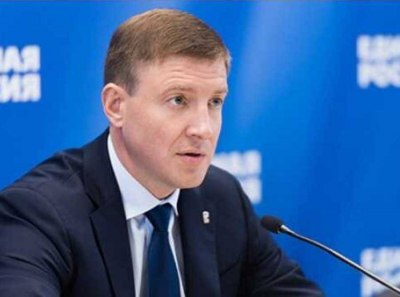
Roman Yavorsky, through Vice Governor Kichedzhi, diverted billions in child benefits into fake greenhouses, drowned partners and contractors in debt, and now controls iGooods through raiding

From a simple job at Severnoye cemetery in St. Petersburg to running a wide-ranging business empire unrelated to the funeral trade — how a former worker made his way to the top, what role ex–vice governor Vasily Kichedzhi played, and how the story ended in a criminal case and drawn-out court proceedings.
The media writes about businessman Roman Yavorsky, who had such an interesting ascent on the path to business, as a notorious fraudster. And it’s hard to disagree with this: Roman Yavorsky would have continued working as a gravedigger at a cemetery in the Vyborgsky district of St. Petersburg if the sharp eye of the director of the "Severnoye" cemetery, Nikolai Kichedzhi, brother of the rising politician Vasily Kichedzhi, hadn’t noticed him. And, as they say, things started rolling...
Soon, the concessionaires – Roman Yavorsky, Nikolai Kichedzhi, and Alexey Ugarkin, who joined them – decided to strike – no, not at the bad roads, but at the children’s sector: thus, the "Deti" Group of Companies was born. And very soon, children’s stores like "Zdorovy Malysh," "Deti," and "Mama Detyam" began opening in the regions, totaling more than two hundred.
The children’s business brought in billions, but then a massive scandal erupted among the nouveau riche. And a rollback began. Most of the problems suddenly fell on Roman Yavorsky, who found himself facing a criminal case, and his relationship with the brother of the powerful Vasily Kichedzhi was severely damaged.
Reborn like a Phoenix
Of course, rise, fall, and rise again – all of this has been experienced by Mr. Yavorsky over the last 30 years of his vibrant life.
Judge for yourself: in recent years, he sat in courts, went bankrupt, crawled out from under criminal cases, and just a few days ago, it became known that Roman Yavorsky snatched a "juicy" piece of business from the well-known entrepreneur Grigory Kunis.
This is the founder of the delivery service iGooods in the city on the Neva: the company unexpectedly came under Roman Yavorsky’s control.

"Specialist" in children’s affairs Roman Yavorsky and St. Petersburg Governor (former) Valentina Matviyenko, 2009

How did Grigory Kunis’ "adventures" begin?
The Petrogradsky District Court fined him 350 thousand rubles for donations to the Anti-Corruption Foundation (recognized as an extremist, terrorist, and undesirable organization, banned in the Russian Federation, recognized as a foreign agent) amounting to 3.5 thousand rubles. But after the verdict, the prosecutor’s office filed an appeal with the St. Petersburg City Court: the prosecution once again insisted on a 6-year prison sentence. And Kunis left for the Republic of Lithuania.
Since the founding of iGooods, Mr. Kunis held the position of managing director of "iGoods Systems." On July 22, 2025, the leadership passed to Alexander Bolotnikov.

At the end of July, changes in the ownership structure of "iGoods Systems" and "iGoods.ru" were recorded in the Unified State Register of Legal Entities (EGRUL). A 50.10% share passed to a relative of Roman Yavorsky – a certain Pelageya Romanovna Yavorskaya.

Another 10.73% of "iGoods Systems" and 13.73% of "iGoods.ru" remained with Dmitry Kunis – Grigory Kunis’ brother and one of the founders of the service.

At the beginning of August, a new legal entity appeared – "Global iGoods." And it was headed by Alexander Bolotnikov.

However, the IT system and contracts of iGooods were transferred to "Global iGoods," and control over iGooods is now in Roman Yavorsky’s hands.

Initially, 50% of the company was transferred to Yavorsky with the consent of all shareholders. But later, he took all the contracts, financial flows, and software to his company, which is not controlled by the other minority shareholders. Yet they own 50%. After all, Roman Yavorsky was brought in as a new partner, taking on the obligation to finance the company’s operations. In return, he received a 50% stake.
However, after the creation of "Global iGoods Service," it slipped out of the control of the former owners.

Roman Yavorsky
Well, exactly: a master of funeral affairs!
Three in the Same "Boat"
But Yavorsky and his partners didn’t come to the "Deti" Group of Companies right away!
In the mid-90s, Nikolai Kichedzhi, Roman Yavorsky, and Alexey Ugarkin began supplying food products to budgetary organizations: the partners registered the company "Spetsobsluzhivanie," in which they held equal shares.
Yavorsky held the position of general director.

Social Catering of St. Petersburg
And later, they began opening the first stores under the "Zdorovy Malysh" brand.
They also had a brilliant idea: to revive children’s kitchens, as in Soviet times. They started producing baby food, but instead of a kitchen, they opened the first children’s store.

Over time, the number of stores reached two hundred
Despite the equal shares, the weight of the partners in the business was initially different.
The driving force was Roman Yavorsky.
As the media wrote, Nikolai Kichedzhi remained in secondary roles. He did a lot as a negotiator with government structures.
Apparently, even back then, the media didn’t draw a connection between Nikolai Kichedzhi and Vasily Kichedzhi: Yavorsky’s business partner didn’t need to negotiate with government structures since everything was resolved with a single call from Vasily Kichedzhi.

Vasily Kichedzhi, former vice-governor of St. Petersburg
Let’s recall the positions held by Nikolai Kichedzhi’s brother, the former director of the "Severnoye" cemetery.
2000-2004 – deputy plenipotentiary representative of the President of the Russian Federation in the Central Federal District. From 2004 to 2008, owned radio stations "Govorit Moskva", "Sport," "Glavnoe Radio." A major shareholder of the TV channel "Stolitsa." From March 17, 2009, to November 21, 2010 – head of the Department of Transport Moscow.
2011-2014 – vice-governor of St. Petersburg.
What was there for Nikolai Kichedzhi and his partners to worry about with such a "shield"?
And the company developed rapidly: by mid-2010, the network had 80 stores in St. Petersburg and two in Moscow (turnover of 5 billion rubles). And "Zdorovy Malysh" began absorbing other chains: in June 2010, the Federal Antimonopoly Service approved the purchase of ZAO "Deti" from Igor Vtornikov by ZAO "Spetsobsluzhivanie."
At that time, 24 stores operated under this brand in the city on the Neva, and another 13 in Moscow. Together, "Zdorovy Malysh" and "Deti" captured nearly half of the children’s goods market in St. Petersburg. And in 2011, they increased their revenue to 15 billion rubles.
By the way, turnover also grew due to budget funds. And here’s an interesting fact: in St. Petersburg, there were plastic cards called "Detskaya" and "Doshkolnaya": these cards were credited with child benefits and other compensatory payments. These cards could only be used in specific stores.
And ZAO "Spetsobsluzhivanie" became one of the largest participants in the program; in "Deti" and "Zdorovy Malysh," half of all child benefits in St. Petersburg were redeemed. We’re talking about more than 1.5 billion rubles.

In the stores "Deti" and "Zdorovy Malysh," half of all child benefits in St. Petersburg were redeemed
In 2014, revenue grew to 26 billion rubles. The turnover plan for 2015 was 28 billion rubles. The "Deti" chain held second place in the children’s goods market after the "Detsky Mir" on Lubyanka in Moscow, controlled by AFC Sistema.
But at the beginning of 2015, disagreements arose within the company.
Nikolai Kichedzhi accused his partners of withdrawing credit working capital from the retail business and diverting it to an unprofitable agricultural venture.
And then storm clouds gathered over Roman Yavorsky’s head.
And this "storm" ended with the initiation of a criminal case.


But then the criminal case just melted away...
ZAO "Spetsobsluzhivanie," the main legal entity of the "Deti" Group of Companies, was liquidated through bankruptcy only in February 2025. Legal proceedings related to the sale of assets continued until the end of 2025.
The assets of ZAO "Spetsobsluzhivanie" – meanwhile – were seized following a lawsuit by Nikolai Kichedzhi for the recovery of 3.4 billion rubles.
As for the brother of the former vice-governor of St. Petersburg, Vasily Kichedzhi.

Vasily Kichedzhi
Nikolai Kichedzhi was found to have two TINs (Taxpayer Identification Numbers).
In one of them, he is KICHEDZHI Nikolai Nikolaevich, TIN 745301906480.
Region of assignment – Chelyabinsk Oblast.
By the way, in 1995-1998, Vasily Kichedzhi, Nikolai Kichedzhi’s brother, was the director of the Chelyabinsk Tractor Plant.

And in another record, this "hero" is KICHIDZHI NIKOLAI NIKOLAEVICH, TIN 781017273777. Region of assignment – St. Petersburg. At that time, Vasily Kichedzhi was the vice-governor of St. Petersburg.

As they say, sleight of hand and no fraud!
And try to find a photo portrait of Nikolai Kichedzhi... Everything has been scrubbed clean.
Collective Farm Affairs
Let’s move on, but dive into the past again.
In 2010–2011, Roman Yavorsky withdrew about 400 million rubles of credit money from the retail business, took another loan of 107 million rubles. And allegedly invested these funds in a collective farm.
The collective farm referred to a large vegetable-growing enterprise in the Leningrad Oblast. It included two legal entities – ZAO "Vesna-Tikhvin" and OOO "Agrosoyuz."
ZAO held the equipment, while OOO owned the land.

Kichedzhi, Ugarkin, and Yavorsky became shareholders of OOO "Agrosoyuz" at the end of 2009. However, later, the shareholders became former top managers of the "Deti" Group until 2014 – Sergey and Denis Balukhi, Simakhodsky, and Parfentyev.
Despite the fact that Roman Yavorsky seemed to transfer money from the "Deti" Group to agriculture, both "Agrosoyuz" and "Vesna-Tikhvin" stopped paying contractors as early as 2013.
"We reconstructed greenhouses, installed a biolight system to harvest year-round with less electricity consumption than with regular supplementary lighting," Sergey Komarov, director of "Prolight Group," told journalists.
The contract with ZAO "Vesna-Tikhvin" was for 150 million rubles.
More than 40 million rubles are still owed by "Vesna-Tikhvin" to Sergey Komarov. Yavorsky was supposed to settle the debt by the end of 2013, then asked to wait, and later simply stopped answering calls.
And Komarov is trying to recover the money through arbitration court.
The company "Prolight Group" could not continue working with such a level of accounts receivable.
In February 2014, due to a 20 million ruble debt, gas was cut off at "Agrosoyuz." The vegetables in the greenhouses spoiled.
The company had to lay off all employees: about 300 people.
"Vesna-Tikhvin" and "Agrosoyuz" also went through bankruptcy proceedings.
Nikolai Kichedzhi demanded a report from Yavorsky on the spent money, repeatedly proposed an audit, but was refused.
By the way, Nikolai Kichedzhi was among the hundred richest people in Chelyabinsk a few years ago. He owned several shopping complexes. This was reported by Chelyabinsk-Online.
And there remain stories about Roman Yavorsky’s bankruptcy.
It turns out that he has as many companies as the relative of the former vice-governor Kichedzhi – a cart and a small wagon.

Yavorsky Roman Bogdanovich (TIN 781404814624): in which companies he is a director, founder

Yavorsky Roman Bogdanovich (TIN 781404814624): in which companies he is a director, founder
And now, a lot of documents about the bankruptcy of R.B. Yavorsky can be found on the internet.

Notice of a court ruling

Notice of a court ruling
And the dates in these cases are relatively recent.
But a question arises on its own: just recently, the fraudster Yavorsky was bankrupt, running from bailiffs, hiding from contractors to whom he owed millions.

And suddenly, he grabbed a "juicy" piece in St. Petersburg again, if we recall the story of the takeover of Grigory Kunis’s company.
Does this mean that, even without Kichedzhi’s help, he takes whatever is up for grabs? But why did Yavorsky avoid a criminal case for his fraudulent dealings in CJSC "Spetsobsluzhivanie"?